



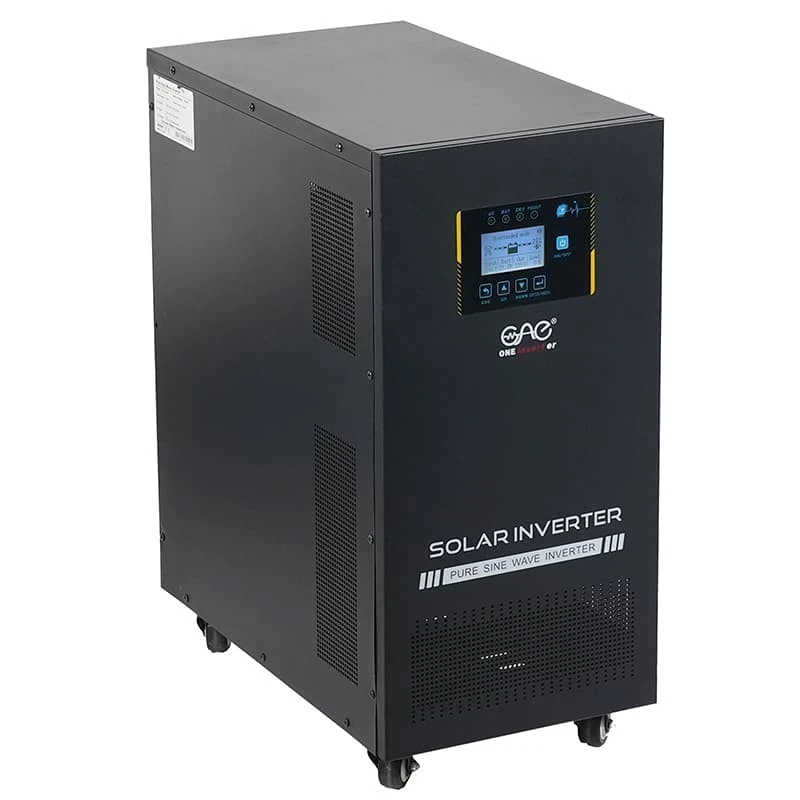


7kw Big Rated Inverter
TD-70248 Low Frequency Pure Sine Wave Inverter with AC Charger
AC input and AC output are two key electrical parameters in an inverter or power device. They refer to the different directions and effects of the current. Understanding the difference between the two will help you to gain a deeper understanding of how the device works and how it functions.
1. AC input
Function: The AC input is usually the inverter's source for converting direct current (DC) to alternating current (AC). For example, in a photovoltaic power generation system, solar panels generate DC which is converted to AC by an inverter for use in a home or grid. AC input refers to the inverter receiving power from the grid.
Common applications: AC input is commonly found in grid connected devices, chargers, UPS (uninterruptible power supply), etc. to provide external power to the device.
2. AC Output
Function: AC output is one of the main functions of the inverter. It converts the DC power source inside or outside the device (such as solar panels, batteries, etc.) into AC power suitable for operating home appliances, factory machinery, etc. This AC power can be a pure sine wave, a modified sine wave or a square wave, depending on the type and quality of the inverter.
Common applications: AC output is widely used in solar power generation systems, wind power systems, electric vehicle charging stations, home appliances and other areas to provide the same type of power as the power grid.
Summary:
AC input is the external AC power received by the device.
AC Output is the AC power output after the device has processed it for use by external loads or systems. The difference between the two is mainly in the direction of power flow and the role of the device, and it plays an important role in power conversion systems such as inverters, UPS, generators, etc.


Hot Tags: 7kw big rated inverter, China, manufacturers, suppliers, factory, customized, quotation, low price, buy discount, pricelist
Send Inquiry
